The Memoir
 One of my favorite genres to work with in my developmental editing work is memoirs. When someone has a burning story to tell, a personal experience that they are just putting together in their mind and heart, there is nothing more pleasurable than helping them on that journey. But there’s an art to crafting story out of the mess of life. Because life is a contradictory mess–repetitive, murky, not always given to strong through-lines.
To me, working with memoir writers is a blend of psychology, narrative shaping, and editing. There are so many rewards as a writing coach for memoir: there is the intimacy of getting to know these brave writers, drawing out the truths and moments they have not fully faced; there is the satisfaction of bringing order to the overwhelming events and memories of a life; and then there is the teaching of craft. They emerge as human beings who have owned their own story and accomplished as writers. Nothing pleases me more.
Finally, the most important thing to remember is a memoir is not a life–it is a story with a particular angle or central structure, no different than any other form of narrative.
Here are a few steps that I think are crucial to the memoir-writing process:
- Facing the scenes and moments you were afraid to revisit.
- Giving a writer time to breathe and take breaks as they encounter intense material.
- Learning to dramatize fragments.
- Creating a persona on the page you are willing to see, warts and foibles, and all.
- Filling the reader in on a world and background you take for granted.
- Filtering out the repetitive strands in a memoir, figuring out which one works.
- Finding a 3-act structure in a life with many acts.
- Finally–thinking about audience. You are not enlisting your reader/audience to take ‘your’ side in a disputatious situation. Nothing will more turn a reader off! You may need to get a hurtful experience off your chest, but when you craft it as memoir, you are drawing your reader into your world and sensibility, and allowing them to come to their own conclusions.
Passive Characters: Zooming in on the Micro & Dialogue as Feint & Parry
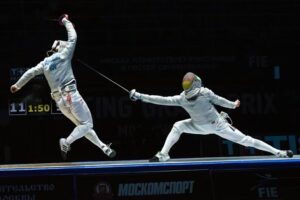 The other day I was working with a coaching client, and we were examining a common issue in fiction writing: the passive character. In workshops, students often receive feedback that their character is too ‘passive’ or that ‘things happen’ to them. This can be tricky, because if you are writing about a character that is struggling internally to find who they are, or are in a kind of crisis, how do you make them less passive? At the same time, it is very hard for readers to invest in a character who is a bystander to their own story. But students often walk away from such a note not knowing how to remedy the ‘passive character.’
In the scene we were examining the main character was supposed to be completing his academic work but instead was pursuing an old, secret passion that had nothing to do with his outward career ambitions. While weeding the garden, his partner keeps poking and prodding him, as she clearly suspects something is awry. The client wanted to write as much of the scene in dialogue form as that was also a craft technique we were concentrating on.
The beauty of the session is we were able to hone in on the precise moments when his character was utterly passive. We could identify how all the energy of the dialogue was being given to the other character. All power rested with her. If one creates dialogue where only one character is carrying the energy, this is where a character fades. We’re not invested. We barely see or hear them. They’re a passive wallflower to the action. And thus, readers can’t really invest.
I encouraged my client to think of dialogue as a feint and parry—a back-and-forth power tussle. What is a feint? It’s a thrust, or a blow, as in fencing. Sometimes it’s a deceptive maneuver. The point is, a line of dialogue is a character getting in what they need to say. It’s their maneuver, their thrust. Thus, one must always figure out—what motivation does each character bring to this parry? Similar to how actors approach their scene work: what is their character’s motivation? What do they want? What do they bring to this dialogue?
What we discovered in our work: his character’s aim was to avoid and not let his partner know his secret.
It is active to avoid.
It is active to preserve a secret.
Suddenly, a one-sided dialogue became two-sided—a true feint and parry. The passive character began to resist—with energy, sly moves, even hostility. New possibilities cropped up: might he throw the partner off the scent? Change the topic? Do something physical in the garden? Get angry and counter attack? There are so many possibilities when one converts a motivation like evasion into an active assertion. It is the other half of the parry. Once writers start to do this, their dialogue starts to crackle more and there is so much more friction. By drilling down on these very specific moments, the writer was actually able to see, much more clearly, what a broad comment such as “Your character is passive” means.
This is the difference between one-on-one coaching versus workshopping. Certainly, in the workshop, I can use student writing, and show the same specific moments and build a craft lesson. However, doing this kind of deep level ‘micro’ work means spending less time on the reading of pages, and ensuring that everyone’s work gets attention. It doesn’t mean the workshop model isn’t useful—of course it is—a community of intent readers, responding to one’s work, is invigorating and nurturant. Yet sometimes, when a writer receives a general note, such as ‘your character is passive,’ it is hard to know what to do. It’s hard not to feel discouraged and that they has to start all over. But often, that’s not the case. It’s about drilling down in a scene and figuring out how to activate a character’s motivations. Let them feint; let them join in the parry.
Private Coaching vs. The Creative Writing Workshop—Knowing vs. Doing
 Since I’ve begun working a writing coach and developmental editor it’s been fascinating to ponder the differences between teaching creative writing in a structured academic classroom versus working with private clients.
When I prepare a creative writing curriculum or syllabus, I roll out a series of exercises, where students hone in on a particular aspect of craft—be it point of view, or dialogue, or three-dimensional characters. The beauty of this method is the lack of commitment. The very fact that students can dash something off, without pressure, is a sneaky way to learn craft and also warm up their writing muscles. These exercises are sketches, no different than what one might do in a drawing class, in preparation for a more elaborate canvas. Very often those small, inobtrusive exercises develop and grow into longer works that the students developed later on in the semester. Over the years I’ve had many students whose story collections, novels, and essays germinated from these brief sketches.
But there can be a downside to this way of teaching. Oftentimes, what students learn in the exercises doesn’t metabolize into the longer manuscript. That is, students may master a particular aspect to fiction writing in their short piece—say, heightened emotion through indirect, significant details—but when they are setting down their scenes with the manuscript they’ve committed to, none of what they’ve learned is on display. These craft lessons simply don’t carry over.
My colleagues in Rhet Comp used to speak of a phenomenon called “knowledge transfer” –apparently this is a whole field of research. Writing skills that are taught, say, in a freshman comp course don’t necessarily carry over into the next subject course where writing is required. For instance, one can teach how to write a topic sentence in an argumentative essay, but when asked to write one for their history course, they don’t ‘transfer’ the skill or knowledge for their history paper. It’s as if they’re starting all over again.
Now I don’t mean to shoehorn the associative, mysterious, creative alchemy of fiction and creative nonfiction into an academic, skills-based regimen. But I do think that the exercise-based way of teaching craft means that isolated craft lessons can remain a bit abstract for a fledgling writer. Those short sprints don’t fully sink in. They may understand an element of writing as a concept, but they don’t know how to activate it in a longer work. I believe this has something to do with knowing versus doing.
What the private coaching environment allows me to do is show these same lessons organically—they emerge out of the manuscript in which the writer is already invested. Their invented world, their remembered experiences, are already alive and vivid in their minds. So the teaching and learning process becomes very different. Our sessions become a kind of ‘real time’ lesson, a Deweyite ‘learning by doing’—a bit different than the exercises I would assign in an academic creative writing workshop. A client will send me pages of a work-in-progress and I wind up creating a lesson on the spot—sometimes several lessons, since many elements of craft are embedded within the draft.
For clients who have taken many writing workshops or read a lot of craft books, these sessions then function as a kind of ‘Aha’ moment. Yes, they’d heard about the concept of subtext in dialogue, but it isn’t until we drill down on the exchanges of characters they care about, that this starts to make sense. Yes, they’ve read about ‘significant detail’ but it isn’t until they are noticing how they haven’t activated all the juicy, telling bits of a world that is so clear to them, that the concept starts to click. The beauty of this model is their engagement—they absorb these lessons more because we are discussing a story, a set of characters, a world, that they are already deeply invested in.
Now there’s one caveat: the difference between undergraduate and graduate, young adults and adults. The exercise model that I designed worked very well for undergraduates, as they are learning to stand on shaky legs, like new foals starting to walk. Yes, the same issues crop up—once they begin writing full on stories we lose some of the elements we’d focused on earlier. But the method is worth it because these students are gaining in confidence to write more than a one or two-page exercise—they are starting to stride into the full-on arc of a narrative. I find my young writers especially need prompts and short inspirational assignments, as they are daunted by continuing with a longer manuscript. Short prompts, some of them done sequentially are the sneaky way of getting them to start building a full short story.
However, graduate students and coaching clients are adults, who often come with a burning fire for what they want to do or say. Maybe they’ve drafted a novel manuscript but stalled out,;or they’ve conceived of a series of short stories that are linked; or have a memoir about a particularly harrowing experience. I find, then, that I’m teaching and editing all at once—helping them wrestle down their ideas, while also showing them the micro elements of craft that they don’t yet possess. They are horses that have been running instinctively, often powerfully, but they don’t quite know how to move and pace themselves forward.
Thus, my own practice as a writing coach/developmental editor is a blend of teaching and editing. My interest, as an editor, is to not only diagnose, as a good editor does, but to show the how of craft, as any good teacher does.


